
Volunteer Opportunities for Seniors and Retirees
Neeraj · May 13, 2025
The main volunteer programs for seniors and retirees are AmeriCorps Seniors (55 and up), AARP's Tax-Aide, Meals on Wheels, hospice programs, SCORE mentoring and online tutoring with Learn To Be. Pick by what each one asks of you (the hours, the driving and the training), because that decides whether you'll stick with it. My pick: tutoring a child online from home.
What does each program ask of you?
| Program | Who can join | Time it asks | Where | Pay |
|---|---|---|---|---|
| Learn To Be online tutoring | Anyone 14 and up, no teaching experience needed | One or two 60-minute sessions a week, for at least one semester | From home, on Zoom or Google Meet | Free to volunteer |
| AmeriCorps Seniors RSVP | 55 and up | A few hours to 40 hours a week | In your community | Some programs offer a small stipend to qualified low-income volunteers |
| AmeriCorps Seniors Foster Grandparents | 55 and up | Varies by program | In person, with children | Same as RSVP |
| AmeriCorps Seniors Senior Companions | 55 and up | Varies by program | In person, with older adults | Same as RSVP |
| AARP Foundation Tax-Aide | No tax experience needed, training provided | A few hours to 40 hours a week, generally February 1 to April 15 | Varies by role and site | Unpaid |
| Meals on Wheels | Set by your local program | Set by your local program | Out delivering meals | Unpaid |
| Hospice volunteering | The hospice trains you | Varies by hospice | In person, with patients and families | Unpaid |
| Peace Corps | U.S. citizens 18 and up, no upper age limit | Service abroad | Abroad | Housing, a monthly living allowance and medical and dental care |
Look at the Where column first. Most of these ask you to show up somewhere, and if driving is hard or you split the year between two homes, that rules a lot out. Then look at the time. "A few hours to 40" can mean almost anything, so ask a program what a normal week looks like before you sign up.
Can I volunteer from home?
Yes. From September 2022 to September 2023, 18% of formal volunteers in the U.S. served completely or partly online.
Tutor a child online with Learn To Be
This is the one we run, so I'll tell you exactly how it works.
Learn To Be gives free 1-on-1 online tutoring to K-12 students from under-resourced communities. Each student gets one volunteer tutor, and they meet every week on Zoom or Google Meet. Our biggest need is elementary and middle school math and reading, but we welcome tutors in every subject. A retired chemistry teacher or engineer has plenty to offer older students too.
Here's what it asks of you:
- Time: one or two 60-minute sessions a week, for at least four months (one semester). Your student counts on you, and most tutors stay longer.
- Equipment: a computer or tablet with a camera and microphone, and a steady internet connection. You can tutor from anywhere, including while you travel.
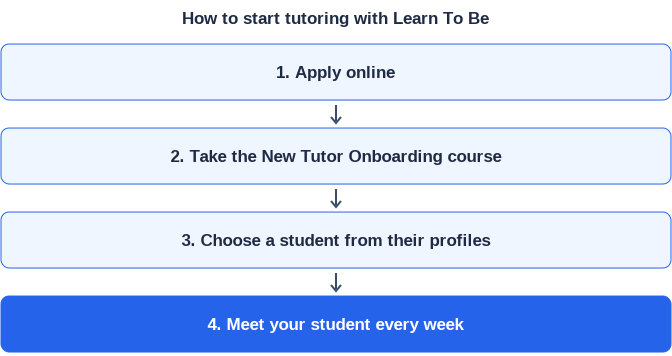
- Experience: none. Every new tutor takes our New Tutor Onboarding course, and you can message our staff and other tutors on our Slack whenever you have a question.
- Age: 14 and up. There's no upper limit.
- Cost: nothing. It's free to volunteer, and it's free for the families too.
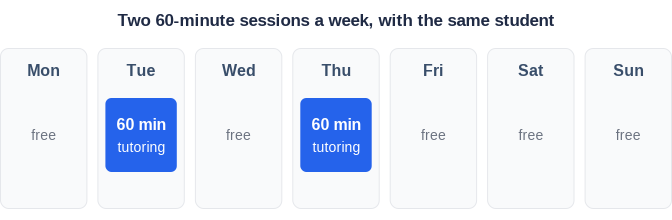
An example week: two hours of tutoring, and the rest of the week is yours.
You don't get assigned a random kid. You read through student profiles and pick a student whose needs and schedule fit you. Then you keep that same student. That's the heart of it. You get to know one child, and you see the moment when something finally clicks.
Most of our tutors are high schoolers, and they're great. But I've noticed our tutors over 50 tend to tutor more hours and stay with us longer. They're so dedicated. Larry, a retired teacher, has tutored over 528 hours with us.
Here's how our tutor Bill describes what he hears from his students:
"I have a list here of some comments that students have said to me or their parents:
- 'I just got smarter.'
- 'I've never done division in my head before!'
- 'I passed Algebra 2!'
- 'My tutor is just what I need.'
- 'I raised my hand in math today.'
- 'My teacher says I'm doing a lot better.'
Kids are thrilled and proud to learn that they can succeed in math, and it's been immensely satisfying for me to see that and help it happen."
You can see Bill's video and more stories from our tutors aged 50 and up on our intergenerational tutoring page.
Getting started takes four steps:
Other from-home options
Many nonprofits need help they can't pay for: grant writing, bookkeeping, newsletters, social media, website updates and translation. Ask a local nonprofit you already care about what they need. Small ones often don't advertise it.
What is skills-based volunteering for retired professionals?
Skills-based volunteering means giving the know-how from your career instead of general help. It's often the most useful thing a retired professional can give.
- Business owners and managers: SCORE volunteers give free, confidential mentoring to small-business owners.
- Accountants, bankers and anyone good with numbers: AARP Foundation Tax-Aide trains volunteers to prepare taxes for free during tax season.
- Teachers, engineers, nurses and other professionals: tutoring a child puts what you already know to work.
- People who've built a career and want one big adventure: the Peace Corps has no upper age limit, and Americans over the age of 50, 60, 70 and 80 have served.
Where can seniors volunteer in person?
If you'd rather be out with people, these are the programs you'll find in most communities.
AmeriCorps Seniors
AmeriCorps Seniors is the federal network of volunteer programs for people 55 and older. It used to be called Senior Corps. It has three programs:
- Foster Grandparents mentor and tutor children.
- Senior Companions help older adults with daily tasks like shopping or paying bills, so they can stay independent longer.
- RSVP connects you with organizations near you. You choose how, where and when you serve.
Meals on Wheels and food programs
Meals on Wheels delivers meals to older adults who can't easily get out. You sign up through your local program. Food banks, community gardens and soup kitchens also need regular help sorting, packing and serving.
Hospitals and hospice
Hospitals need volunteers for information desks, gift shops and waiting rooms. Hospice is a bigger commitment, and a meaningful one. Medicare's rules say a hospice must train its volunteers, and their hours must add up to at least 5% of the patient care hours its paid staff give. In hospice, volunteers are part of the care itself.
Museums, libraries, parks and animals
Museums need docents and front desk help, and libraries need people to shelve books and run reading programs. Volunteer.gov lists volunteer roles on federal public lands, like national parks. Animal shelters need dog walkers, cat socializers and foster homes. Habitat for Humanity builds homes with volunteers on site.
How can I volunteer with lonely older adults?
Three of the programs above put you with older adults who need company: Senior Companions, hospice volunteering and Meals on Wheels. Senior centers and assisted living homes near you often welcome regular visitors too. Call and ask.
How do I choose the right volunteer work in retirement?
Answer four questions before you sign up for anything:
- From home or out of the house? Be honest about driving, weather and how much you travel.
- How many hours a week, really? Start small. It's easier to add hours than to quit.
- A cause or a skill? Some people want to help animals or the environment. Others want to use what they spent 40 years getting good at.
- One person or many? Mentoring and tutoring mean getting to know one person well. Food banks and events mean meeting lots of people for a short time.
Volunteering is also linked to living longer. In a study of 12,998 adults over 50, people who volunteered at least 100 hours a year had a 44% lower risk of dying over the next four years than people who didn't volunteer. That's a link, not proof that volunteering causes it, and an earlier study of adults 65 and older found the benefit only among people who volunteered for one organization or 40 hours a year or less. So don't pick volunteer work for your health. Pick something you'll want to keep doing.
Frequently asked questions
Where do retirees volunteer?
Mostly through the programs on this page. AARP Create The Good is a free search for volunteer roles near you.
Where are volunteers needed most?
At Learn To Be, we have more students than tutors. Students who need help with reading, writing or English, and families who want a Spanish-speaking tutor, wait the longest.
Are there free volunteer opportunities for seniors?
Yes. Volunteering with Learn To Be is free, and so is most volunteer work. The exception is "volunteer travel": programs that charge you a fee to volunteer abroad are trips you pay for.
Is there an age limit for senior volunteers?
Most programs set a minimum age, not a maximum. AmeriCorps Seniors starts at 55. The Peace Corps has no upper age limit. Learn To Be tutors can start at 14, and nobody is too old.
Can I volunteer if I'm not good with technology?
Yes. Most in-person programs need no technology at all. And many of our tutors started with very little experience with technology. Our onboarding course walks you through the tools step by step, and our staff help you get set up.
Start tutoring with Learn To Be
If tutoring one child from home sounds like you, we'd love to have you.
Apply to become a Learn To Be tutor, or read more about intergenerational tutoring first.